
YOUR FIRST INVESTMENT PROPERTY
First-Time Investor Financing: How to Fund Your First Deal
You don’t need a portfolio to start the conversation. If you’re considering your first flip, rental, or build, start by understanding the financing, the cash you’ll need, and what a lender will want to review.
Talk About My First Deal ↗
Can a first-time real estate investor get financing?
Yes—some business-purpose property programs consider first-time investors. Experience is one part of a review, alongside the property, credit, available cash, project team, and repayment plan. Being new does not automatically rule you out, but it does not guarantee eligibility either.
Public lender programs include options for first-time flippers, rental buyers, and, in some cases, first-time builders. The requirements differ. Viera Investment Group LLC helps you explore potential lender options for your situation. We are a financing brokerage, not the direct lender.
Based in New Jersey, we work with investors across state lines. State coverage and program availability must be confirmed for each inquiry. This guide concerns investment and business-purpose financing; a home you plan to occupy may need a different loan.
Decide what you want the property to do.

Find the potential.
A flip starts with the purchase price, rehab scope, and a supported resale value.
Explore fix-and-flip financing ↗
Think beyond closing.
For a rental, start with the rent, property expenses, cash reserves, and your holding plan.
Explore rental and DSCR loans ↗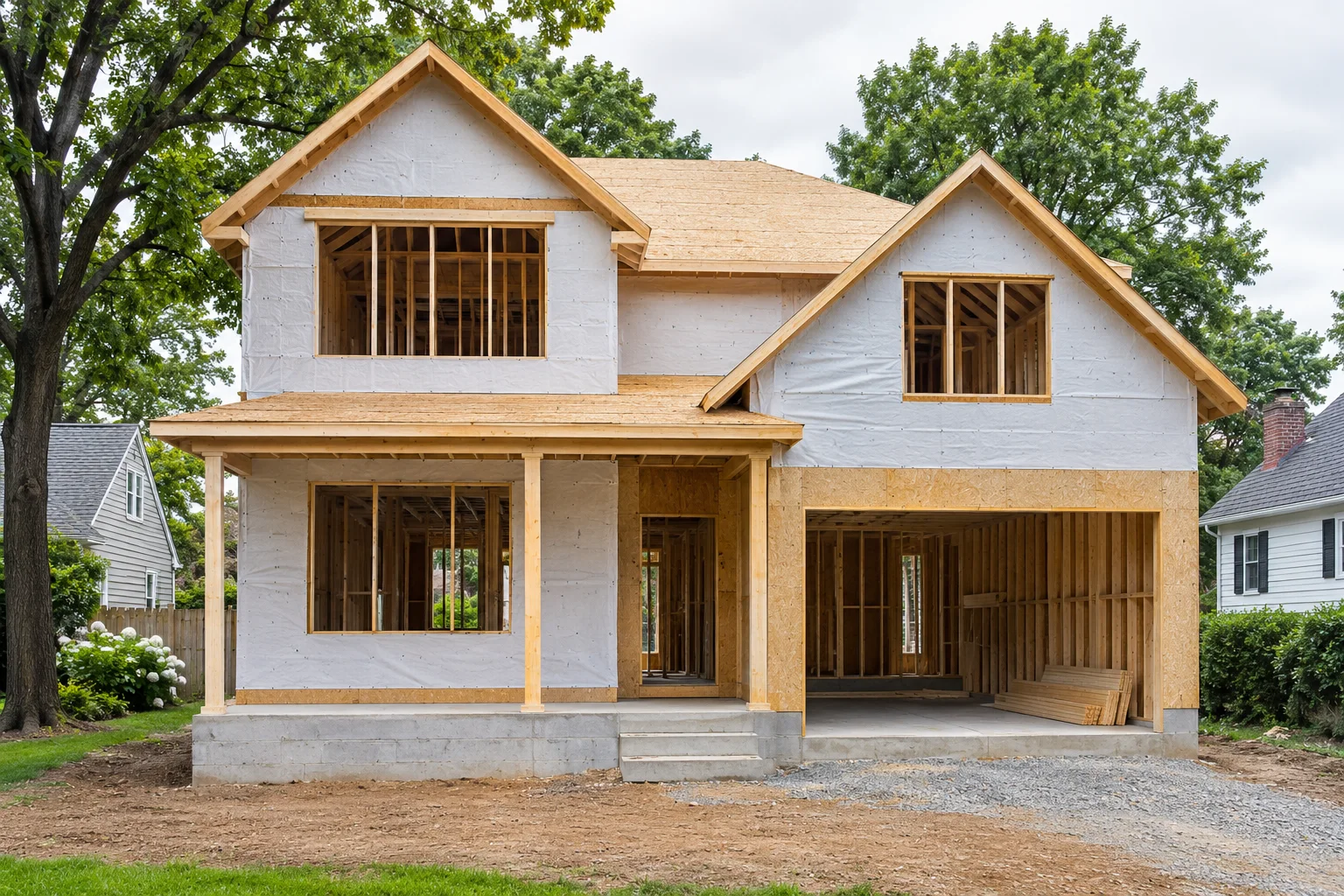
Give your build a foundation.
New construction brings site control, permits, a builder, and a complete budget into the review.
Explore construction financing ↗First-time investor and first-time builder are different descriptions. A new investor working with an experienced licensed builder still needs to explain who will supervise the work, manage the budget, and handle delays. Ask about the specific program before assuming prior experience is unnecessary.
Choose one starting strategy and a target market. Write down what you want the property to do: sell after renovation, produce rent, or become a new build.
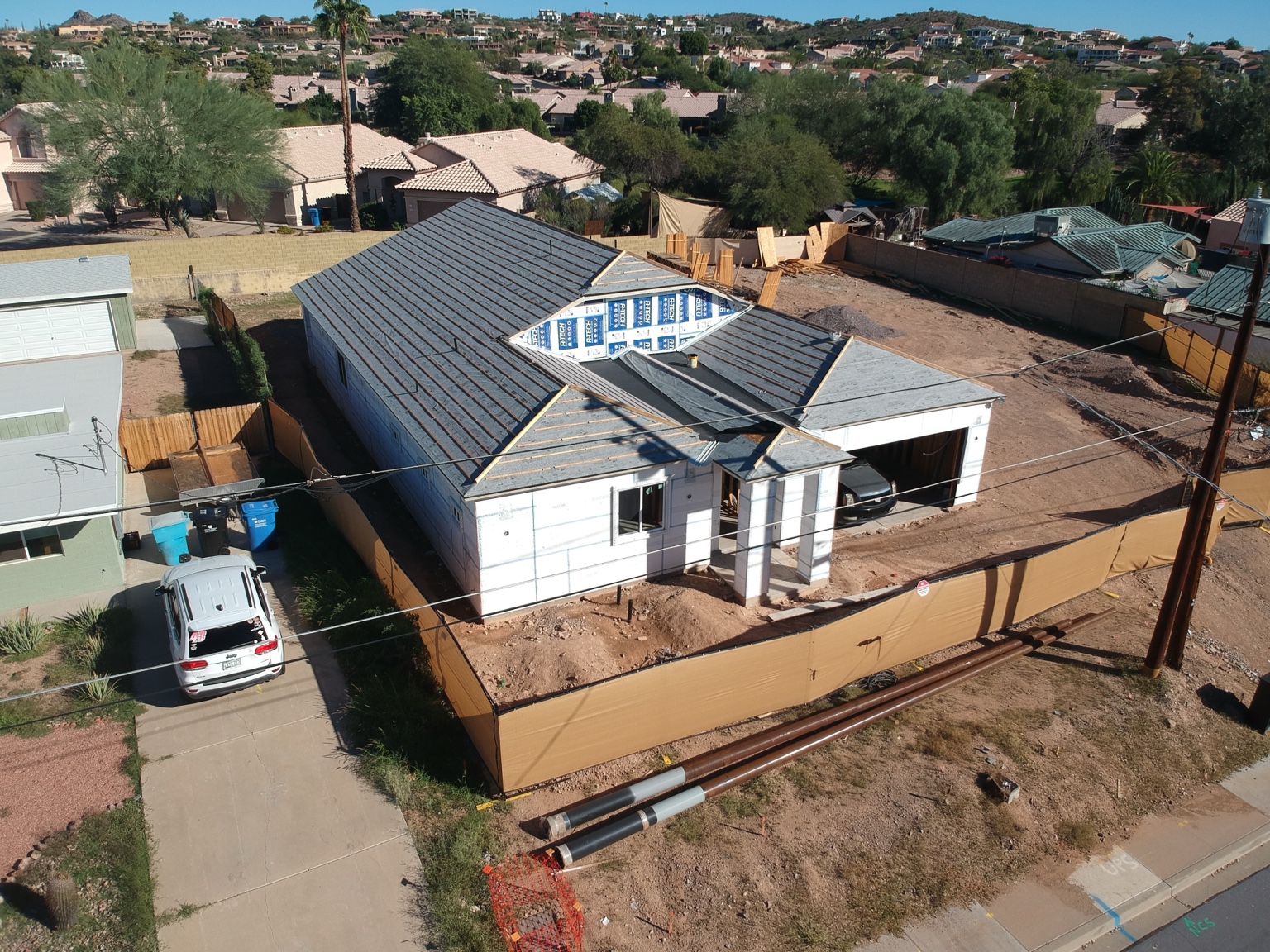
There’s a real project
behind every financing question.
We’re investors and developers ourselves. Our work has taken us beyond New Jersey and New York, including active construction in Phoenix with affiliated company Burco Acquisitions.
That’s why we start with what you want to accomplish—and the practical questions that come with it.
See our Phoenix project ↗Phoenix, Arizona · Construction progressWork out the full cash requirement.
The down payment is only part of the picture. Ask about closing costs, lender and broker fees, interest, taxes, insurance, inspections, and cash reserves. For renovation or construction work, confirm whether draws reimburse completed work and whether you must advance money before a draw is released.
A lender may apply both a loan-to-cost limit and a value limit. LTC compares the loan with accepted project costs; LTV compares it with a property value. ARV is an estimate of the value after renovation. A high advertised percentage does not tell you the cash needed for your individual deal.
More than the down payment.
- Project contribution
- $50,000
- Closing costs
- $10,000
- Holding costs
- $15,000
- Contingency cash
- $15,000
How this example works
Assume a $200,000 purchase and $50,000 renovation, for $250,000 of accepted costs. If hypothetical financing covers 80% of those costs, the loan is $200,000 and the remaining contribution is $50,000.
If you separately allow $10,000 for closing costs, $15,000 for holding costs, and $15,000 of contingency cash, your total cash plan is $90,000. These figures are invented for illustration, are not a quote, and do not represent a program minimum. A real lender may use different eligible costs, leverage, reserves, and draw rules.
Read our guide to ARV and cash contribution before relying on a purchase-price percentage alone.
List your available cash separately from expected financing. Build in closing costs, reserves, and a delay allowance; ask the lender which expenses it will actually finance.
Can gap funding help with a down payment or closing costs?
It may. For an investment property, gap funding describes supplemental capital between the primary loan and the money needed to close or carry out the project. Eligible uses may include a down-payment shortfall, closing costs, or initial work before a rehab draw. Published gap-funding guidance describes a transaction-specific review of that shortage—not automatic coverage of every expense.
Structures differ. A second-position loan adds property-secured debt behind the senior mortgage. Other providers coordinate unsecured credit-based capital. An equity partner instead contributes capital under an ownership and profit-sharing agreement. Those choices have different repayment, control, collateral, and personal-guarantee implications. Investor gap funding is not one standardized product, a free grant, or the same as owner-occupied first-time homebuyer down-payment assistance.
- Size the gap first. Obtain the primary loan figures, itemized closing costs, reserves, and draw requirements. Subtract your available cash and confirmed loan proceeds from the costs that must actually be funded.
- Clear the structure with the primary lender. Disclose every source, including unsecured borrowing. Ask whether borrowed contributions, junior liens, or partner equity are acceptable and whether your own cash is still required.
- Test repayment together. Compare total fees, payments, maturity dates, guarantees, and the sale or refinance needed to repay all obligations. Extra capital does not create extra profit.
For the hypothetical $90,000 cash plan above, having $65,000 available leaves a $25,000 shortfall. That is a planning gap—not an approved $25,000 gap loan. A provider could decline it, require more cash, or exclude particular costs.
Levine Capital’s published guidance specifically calls for disclosure and senior-lender acceptance of borrowed down-payment funds. Its separate second-position underwriting overview also considers combined leverage, valuation, liquidity, and the exit. These are public examples, not confirmed Viera program access.
Tell Viera the project, primary loan status, available cash, and estimated shortfall. Ask what can be reviewed before applying for supplemental credit or committing to a second funding source.
Can an experienced GC or investor partner help you qualify?
Sometimes. A lender may assess the relevant experience of the team responsible for completing a project. That can help a first-time investor address an experience requirement, particularly on construction or heavier renovations. It does not mean that hiring any contractor automatically gives you an experienced borrower’s terms.
A qualified general contractor
The GC performs and manages the construction under a defined contract. Provide comparable completed projects, licensing where required, insurance, references, scope, and a line-item budget. Ask whether the lender evaluates the contractor separately or needs an experienced person in the borrowing entity. Lima One’s construction guidance recognizes relevant GC or fix-and-flip experience and describes a separate contractor review; its borrower requirements still apply.
An experienced investor partner or guarantor
A genuine partner may contribute project management, capital, ownership participation, or a guarantee. Ramm’s first-time builder program describes evaluating a qualified GC or experienced guarantor alongside a new sponsor. Willowbrook’s discussion of team experience explains that some structures require the experienced person to join the borrowing entity. Those are program-specific approaches, not universal ownership or guarantee rules.
What could improve? Acceptance of the relevant experience may expand available programs or affect leverage and pricing. RCN’s published construction tiers, for example, vary leverage by documented completions. They do not say that a newly hired GC automatically moves every borrower into a higher tier.
What about faster closing? A complete team file can reduce avoidable document requests. Lima One notes that completing borrower underwriting can help subsequent construction loans close more quickly. That supports preparing early—not promising that adding a partner will accelerate your closing. New owners or guarantors can require additional checks; title, valuation, permits, credit, and liquidity still matter.
- Show the actual person’s role, comparable project history, and evidence of completion. Do not present someone else’s record as your own.
- Ask whose experience counts, how recent it must be, and whether ownership, management authority, or a guarantee is required.
- Agree on responsibilities, capital, compensation, profit and loss sharing, overruns, and exit decisions with appropriate independent professional help. Viera does not form entities or draft partnership agreements.
Before changing ownership or promising a profit split, ask the lender to review the proposed team. Compare the resulting terms and responsibilities with a first-time investor program on your own merits.
Make the first deal easy to understand.
Before calling, gather the property address or target city and state, intended strategy, estimated purchase price, budget, available cash, credit estimate, and desired timeline. If you already have a contract, contractor bid, lease, plans, or permits, keep them available.
For a flip, explain the renovation and why the resale estimate is reasonable. For a rental, gather rent and expense information. A lender’s DSCR calculation is a qualification measure, not a complete operating budget; maintenance, vacancy, management, and repairs can still affect your actual cash flow. For a build, separate land, hard costs, soft costs, contingency, and existing debt.
Our investment property loan checklist, DSCR guide, and construction checklist explain those preparation steps in more detail.
Have the city and state, financing purpose, rough budget, and timing ready for a call. If you do not have a property yet, say so—we can start with what you’re looking for.
Have a first deal in mind?
You don’t need every answer to start. Tell us the location and what you’re planning; we’ll talk through the financing questions with you.
Do you need an LLC for an investment property loan?
It depends on the lender and program. Some allow individual borrowers in certain states; others require an eligible business entity. Confirm the proposed borrower before setting up a company solely for a loan.
If the loan will be made to an LLC, ask which documents are required. The checklist may include formation documents, EIN confirmation, an operating agreement, ownership information, good-standing evidence, and authorization for the person signing. Also ask which owners must provide a personal guarantee. An LLC does not automatically make a loan nonrecourse.
Viera does not provide LLC formation, structuring, legal, or tax services. We can help identify the selected lender’s document requirements. Use the IRS’s official EIN information and the appropriate state agency for official records. Get advice about your entity from your own attorney or tax professional.
Is startup business funding the same as a property loan?
No. Startup business capital and real estate acquisition financing serve different purposes. Some investors explore credit-based capital for an approved funding gap, as explained above; the primary property lender must accept its source and use. A new company’s credit-based funding does not automatically qualify as an acceptable property down payment, reserve, or equity contribution.
If you plan to use borrowed funds alongside a property loan, disclose the source and obtain the property lender’s approval. Confirm the startup provider’s permitted uses, repayment obligations, and any restrictions as well. See our startup business funding guide and business funding options for that separate conversation.
Questions to ask before accepting terms
- Does this program consider first-time investors for this property and location?
- What cash will I need at closing and during the work?
- How are renovation or construction funds released?
- Which fees, reserves, guarantees, and prepayment terms apply?
- What happens if the project takes longer or the refinance is delayed?
- What documents are needed now, and what can wait until a lender review?
You do not need to upload sensitive documents to make the initial Viera inquiry. Start with your contact details and financing purpose. Detailed document collection comes later through the applicable process.
A few questions before you start.
Can I get a fix-and-flip loan with no experience?
Some programs consider first-time flippers. The property, budget, available cash, credit, contractor, and exit still require review. Approval and terms depend on the selected lender.
Do I need an LLC before contacting Viera?
No. Start the conversation first. We can identify whether a potential program requires entity borrowing and which documents its lender requests. Viera does not form or structure LLCs.
Can I live in a property financed with a business-purpose investor loan?
Do not assume so. Business-purpose investment property programs may prohibit owner occupancy. Tell us if you intend to live in the property so the appropriate financing path can be identified.
Can you discuss an out-of-state investment?
Yes. Viera welcomes inquiries from investors outside New Jersey. Available lenders, states, property types, and programs must be confirmed for the project.
Sources and further reading
Reviewed November 8, 2026. Public program pages are examples, not a guarantee of Viera access, current eligibility, or an offer. Requirements and state coverage must be confirmed for each inquiry.
YOUR NEXT STEP
Your first investment starts with a conversation.
Share what you’re planning and where. We’ll help you understand potential financing options and the information needed for the next step.
Talk About My First Deal ↗Educational information only. Viera Investment Group LLC is a brokerage, not the direct lender, and does not provide legal, tax, or LLC formation services. All financing is subject to provider review and written terms.